July 9, 2012

Ohio Returns Obese Boy to His Mom

Remember the boy in Ohio who was taken away from his home by the state government last October?

At the time, the boy was eight years old and weighed over 200 pounds. Citing "imminent danger" to the boy's health, case workers removed him from his home and placed him at his uncle's residence. The boy is now down to 166 pounds and has been returned to the custody of his mother, who has said she will use free medical services to address her son's health. The mother then decided to move with the boy to Georgia. Her right to move out of the state was called into question, but a juvenile court judge decided she had the right to move.

Can you blame her for wanting to leave Ohio after such an ordeal?
One year ago, Dr. David Ludwig and Lindsey Murtagh argued in the Journal of the American Medical Association that the removal of severely obese children from their family homes could be legally justifiable if there was "chronic failure to address medical problems" by the parents. This is a rare case that has put this thesis to a test. Obviously, the health of very obese children is a serious consideration, but so are the rights of the families.

Red flags should be raised since progressive statists have shown a willingness, even an eagerness, to break into the family structure. You can see this impulse in the JAMA commentary mentioned above and in more subtle examples like this New York Times editorial suggesting that family dinners are overrated in improving youngsters' well-being. And with Obamacare upheld (for now), even adults will have their waistlines subject to official government scrutiny. It may soon be that Georgia nor any other state can offer sanctuary from government intrusion into our personal and family health matters.

July 3, 2012

Federal Department of Weight Watchers


Sarah Palin warned us about "death panels" but did you know that Obamacare will also make heavy-set patients deal with "girth panels"?

If this article is accurate (it was written before last week's Supreme Court decision, which upheld most of Obamacare), then obesity screening and referrals to an intensive weight-loss program will become part of standard patient care under Obamacare.

Well-intentioned as this panel may be--cough cough--it's fair to ask whether it would be effective or just another form of government harassment. As another L.A. Times article tells us, "A federal health advisory panel [which] recommended that all obese adults receive intensive counseling in an effort to rein in a growing health crisis in America ... acknowledged that one problem with its recommendation was that no studies have shown such intensive programs provide long-term health benefits."

Sounds like more "waist-ful" government spending.
(Hat tips: IWF.org and WeeklyStandard.com)

July 2, 2012

Leftist Food Writer Says Food Deserts Are "A Flawed Conceit"

Tracie McMillan, the author of The American Way of Eating and a significant voice in the "food justice" movement, does a surprisingly nice job of taking apart the urban myth of food deserts in a new Slate article.

McMillan's work focuses on the intersection of food and economic class, and her latest book stirred up a lot of discussion when it was released earlier this year, including a lengthy response by Rush Limbaugh

June 28, 2012

Harvey Milk's Favorite Cookie?

The awkward fusion of food and politics has brought us some strange flavors lately: socialist mayonnaise, pro-Occupy ice cream, gay marriage coffee--and now gay Oreos.
Oreo Gay Pride

The image above, which was posted to the Oreo Facebook page, swiftly led to a boycott by supporters of traditional marriage.


Oreos are made by Kraft Foods. General Mills has also recently come out to oppose a proposed constitutional amendment to ban same-sex marriage in Minnesota, where General Mills is based. And apparently there's more of these pro-gay marketing stunts to come.

It's one thing for a company like Starbucks to pull a stunt like this, but Kraft and General Mills are both middle-America, kitchen-table brands. You have to wonder if they actually thought this would help their business.

As a consumer, I want to be able to enjoy some cookies or Velveeta nacho sauce without feeling like I'm making a statement about one of the most contentious issues of our time; an issue with creates sparks in the religious, political, and cultural arenas. Whether or not you think gay marriage is a good idea, this kind of advertising is a bad idea.

June 26, 2012

AMA Is A-OK with Taxing Soda

The let's-tax-soda-and-anything-else-that's-quote-unquote-bad-for-you movement just got a boost from the American Medical Association. Without fully endorsing taxes on sodas, the nation’s largest physicians group voted to adopt a policy that is open to taxing soda and other sugary drinks to pay for anti-obesity programs.

“While there is no silver bullet that will alone reverse the meteoric rise of obesity, there are many things we can do to fight this epidemic and improve the health of our nation,” AMA board member Dr. Alexander Ding said in a statement. “Improved consumer education on the adverse health effects of excessive consumption of beverages containing added sweeteners should be a key part of any multifaceted campaign to combat obesity.”

West Virginia and Arkansas already tax sodas (and nevertheless have plenty of obese people), and cities including Philadelphia and Richmond, California have considered doing so.

Is it just me or is it really cynical to use soda taxes to fund obesity education programs? Does it make sense to make education dependent on people doing the thing you're trying you're trying to teach them not to do?

"And if history is any guide," says the blog at ConsumerFreedom.com, "earmarking any future drink tax revenues won’t guarantee that the intended programs are funded or expanded. According to the Government Accountability Office, only two percent of the tobacco settlement revenues went to fund smoking cessation programs. State education lotteries also haven’t been the promised boon to public schools: In many cases existing school money was shifted back to the general fund and replaced with lottery profits."

June 20, 2012

L.A. & Cambridge, MA Jump on Bloomberg Ban-wagon

Only about six weeks after Massachusetts tried to ban school bake sales, the Cambridge city council has proposed a ban on large sodas/sugary drinks in restaurants:

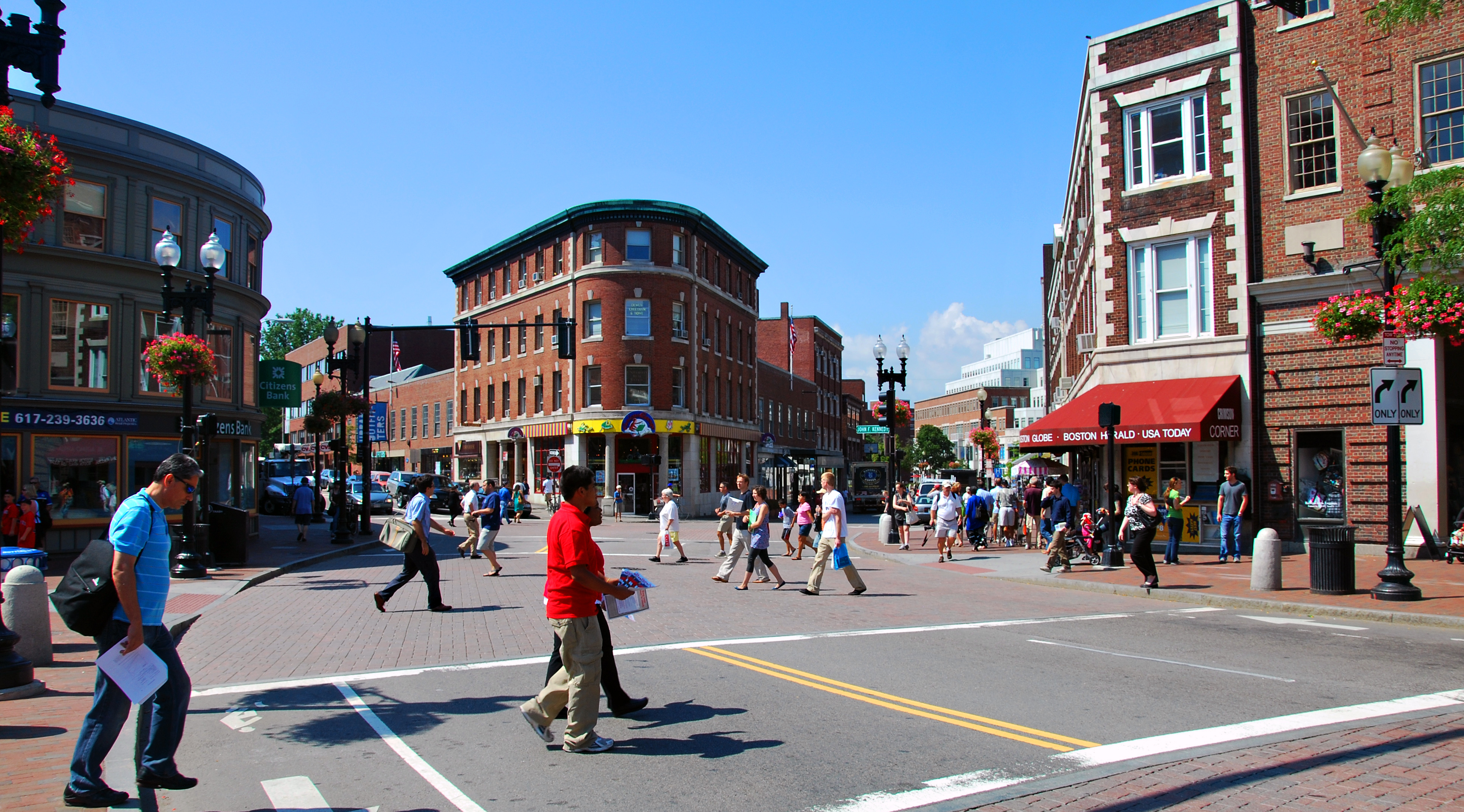
File:Harvard square 2009j.JPG
Harvard Square in Cambridge, MA, one of
America's most liberal cities (photo: Wikipedia)
"WHEREAS High intake of soda and other sugar-sweetened beverages increases the risk of obesity and diabetes; and WHEREAS New York City has a plan to limit the serving size of soda and other sugar-sweetened beverages sold in restaurants; now therefore be it ORDERED that the City Manager be and hereby is requested to refer the matter of a ban on soda and sugar-sweetened beverages in restaurants to the Cambridge Public Health Department for a recommendation."
 
On the West Coast, a member of the Los Angeles City Council has introduced a motion to ban soda in park and library vending machines. This councilman, Mitchell Englander, thinks soda makes teens not only obese but violent. He also admits that the ban would have no real effect, writing: "The elimination of sodas in RAP (Recreation, Arts & Parks) vending machines will not put an end to childhood obesity, but it is a small step in educating the public about healthier food and beverage choices."* All it's going to teach people is to go buy their soda somewhere else.

Of course, soda bought at public areas would just be the latest in a long list of things banned in California. L.A. and Cambridge are some of the most liberal cities in the country, but if you live in a red state, don't assume that you're safe from all this banning. Republican former congressman Bob Barr says, "My home state of Georgia — long a place where candidates and elected officials seeking re-election have earned their chops by railing against Washington busybodies — has succumbed to the notion that the role of government is to protect people by controlling them. From small towns to the bustling and largely Republican-dominated Atlanta suburbs, helmet laws and smoking and 'texting' bans are becoming the norm." We're not peachy keen about this nanny-state madness spreading any farther across the fruited plain.

*Jacob Sullum has a really good column along these lines, explaining how the real game is not to lower obesity but to set a "parentalistic precedent."